
Is Your Yellofin Genuine? How to Spot the Hidden Risks of Knockoff Surgical Stirrups
We've recently observed a concerning increase in knockoff versions of surgical stirrups entering our repair facility, with the Allen/Hillrom Yellofin model being a frequent target for these inferior, non-OEM imitations.
Alarmingly, in nearly every instance, the facilities sending us these items for repair had no idea they were using imitation equipment.
We specialize in the meticulous repair and maintenance of surgical stirrups, handling thousands of sets over the years. This experience allows us to quickly spot the differences between genuine quality and non-OEM models. Please note, simply purchasing from a local vendor is no guarantee that the equipment hasn't originated from an unreputable source.
Because these knockoffs pose hidden risks to patient safety, comfort, and equipment long evity—regardless of where they were purchased—we felt it was necessary to investigate this issue thoroughly. To provide clear insight, we acquired one such model directly from an overseas manufacturer to conduct a detailed, side-by-side comparison.
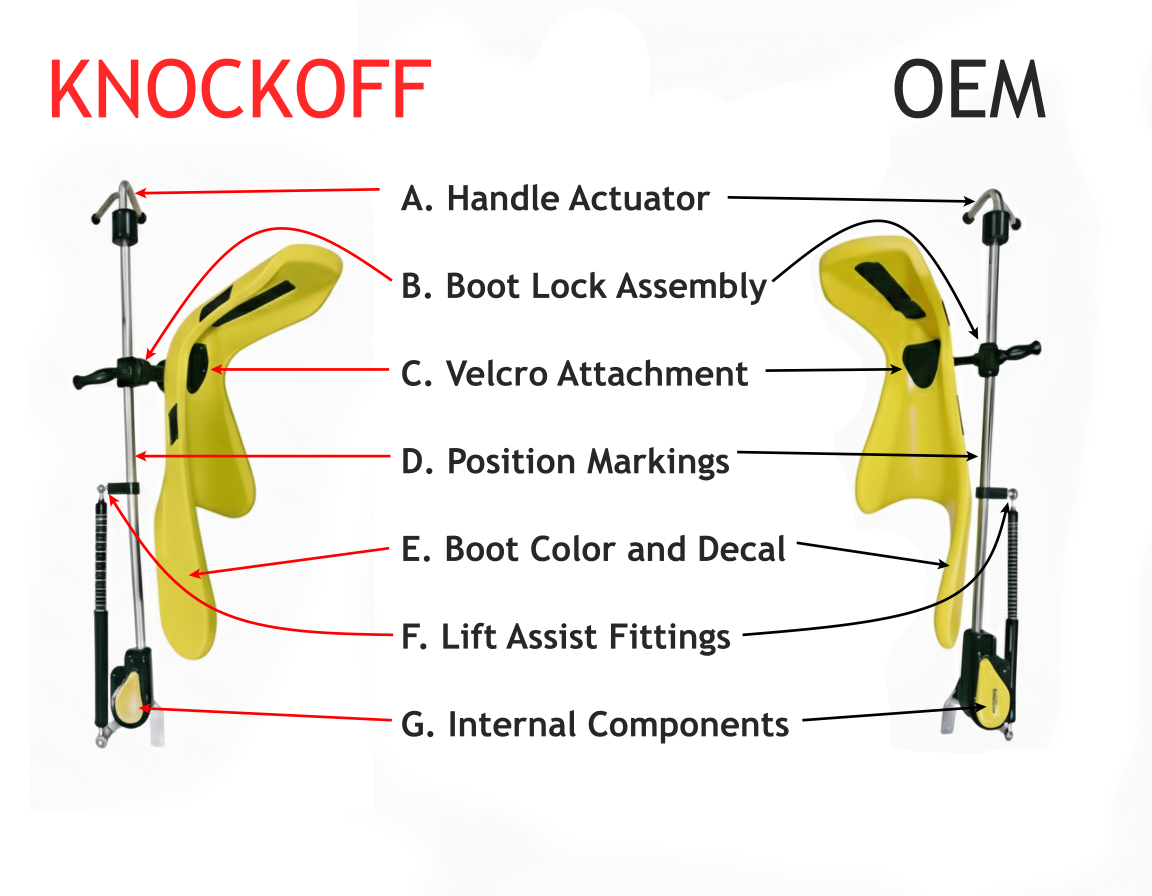
Here are 7 crucial design differences (labeled A-G in the accompanying photo) that reveal an inferior, knockoff version of the Allen Yellofin stirrup:
7 Key Differences Between Genuine and Knockoff Yellofin Stirrups
A. Handle Actuator
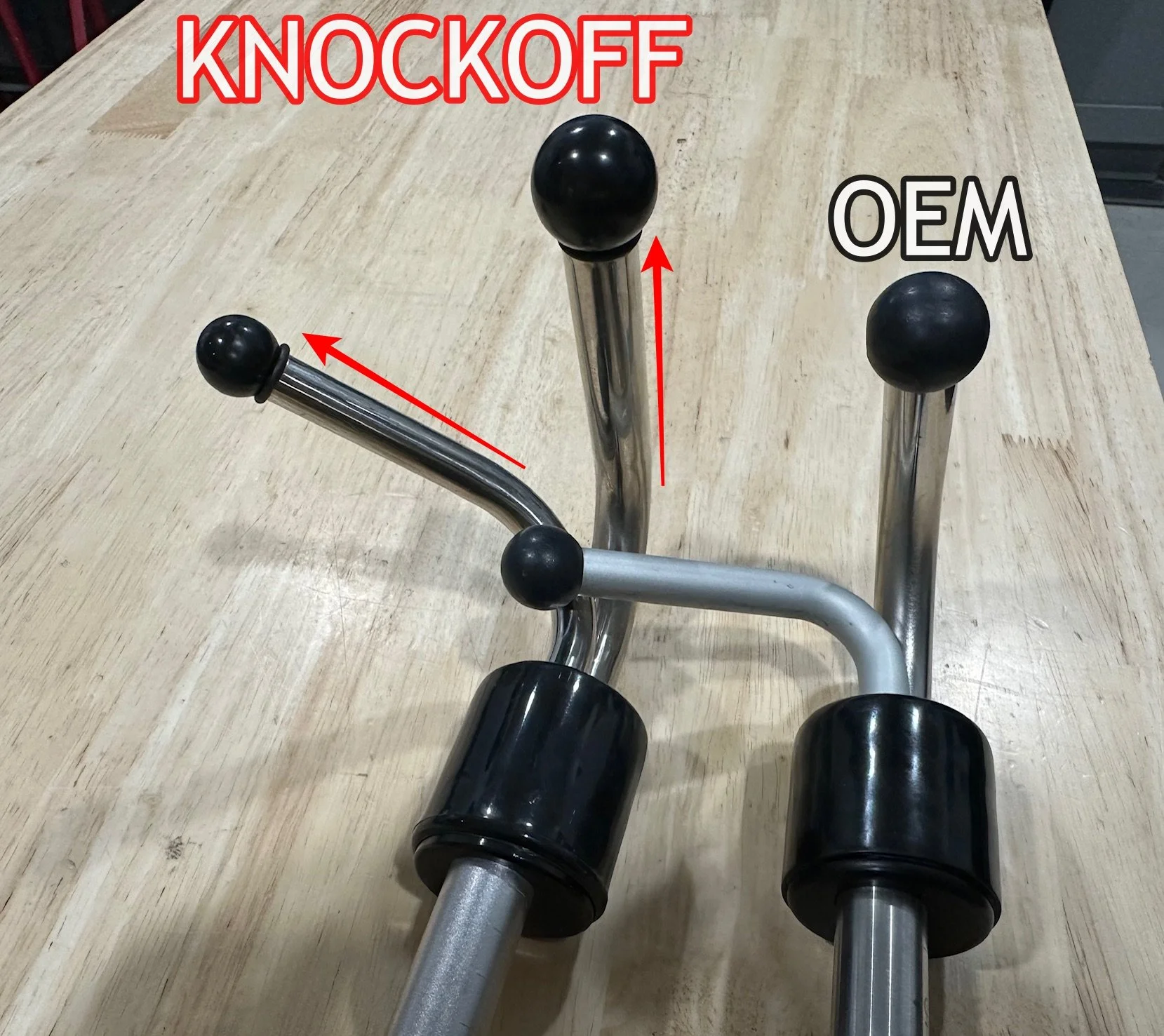
The genuine Allen handle is precisely engineered at ≈4.75". The knockoff version features a significantly longer ≈6" handle. Crucially, the genuine Allen round handle knobs are secured with a roll pin and screw on the outside of the shaft; the knockoff is often simply glued inside. The knockoff’s extra length makes it awkward and less comfortable to quickly actuate during a procedure.
B. Boot Lock Assembly
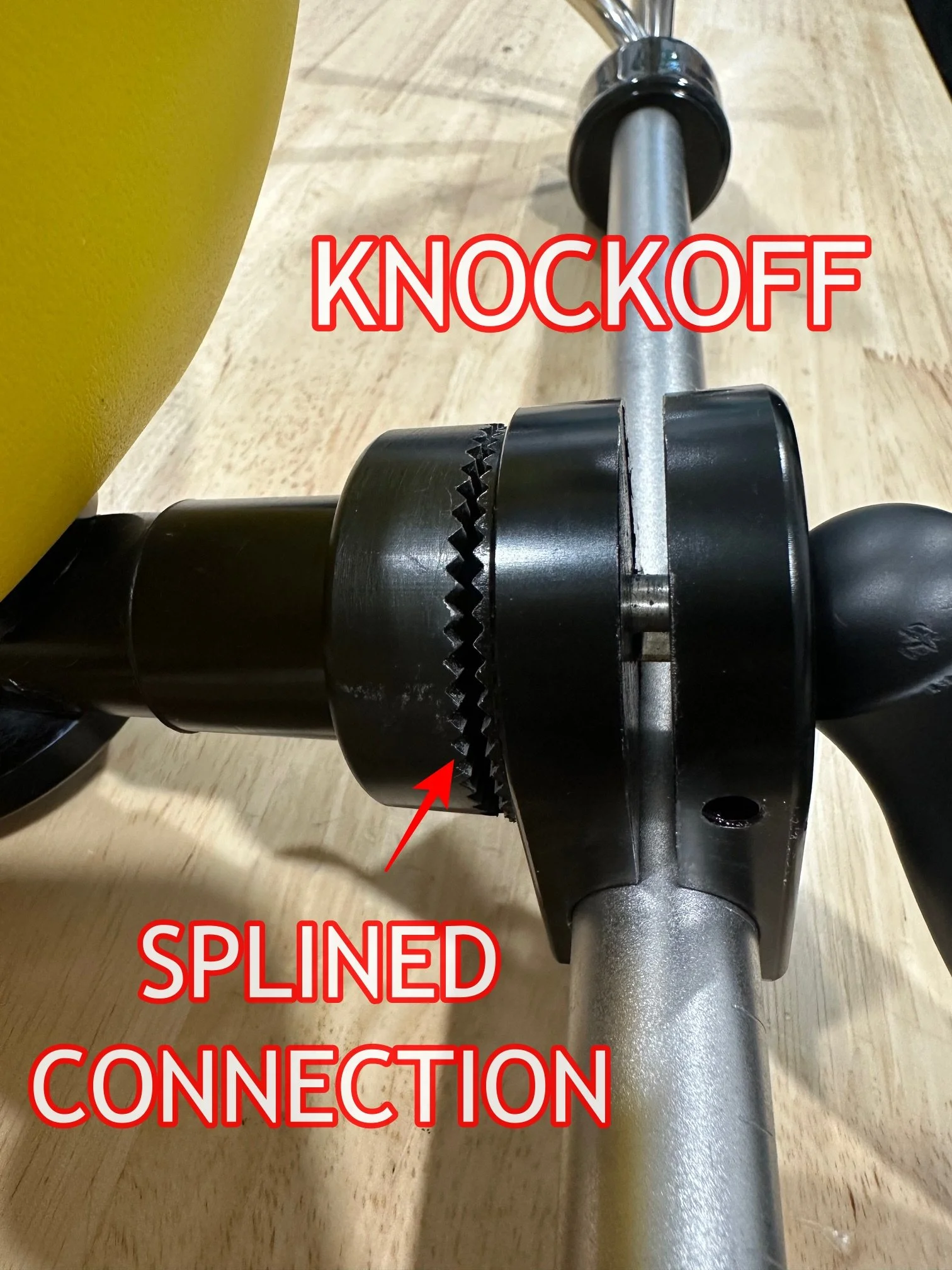
The OEM Allen design allows the boot lock assembly to rotate or pivot slightly with the patient, providing necessary movement and minimizing strain on the patient's joints during positioning. The inferior version uses a splined mechanism that locks completely tight, minimizing adjustability, and potentially adding undue stress on the patient when minor adjustments occur.
C. Velcro Attachment
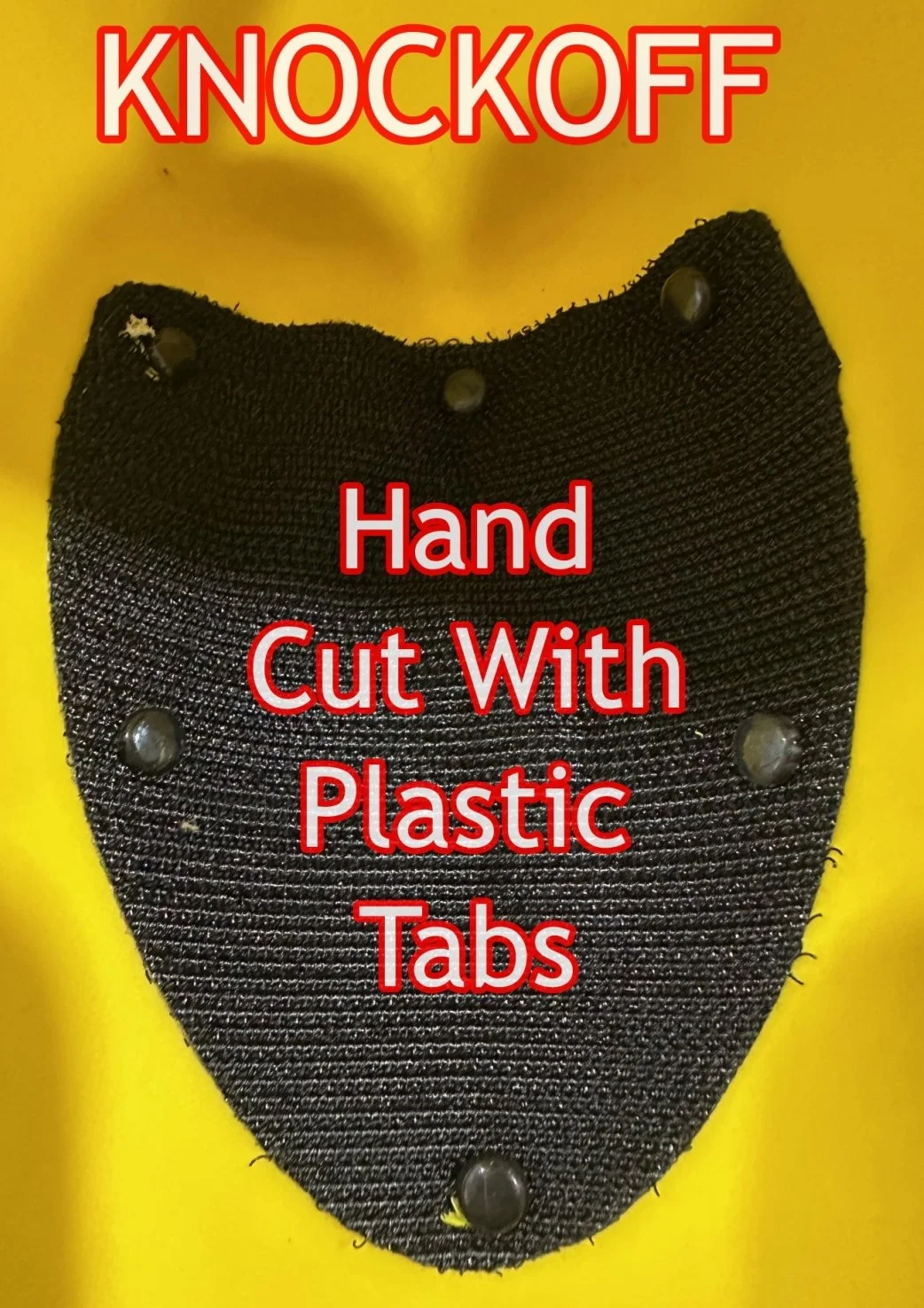
The knockoff version utilizes round plastic tabs to hold the Velcro in place.
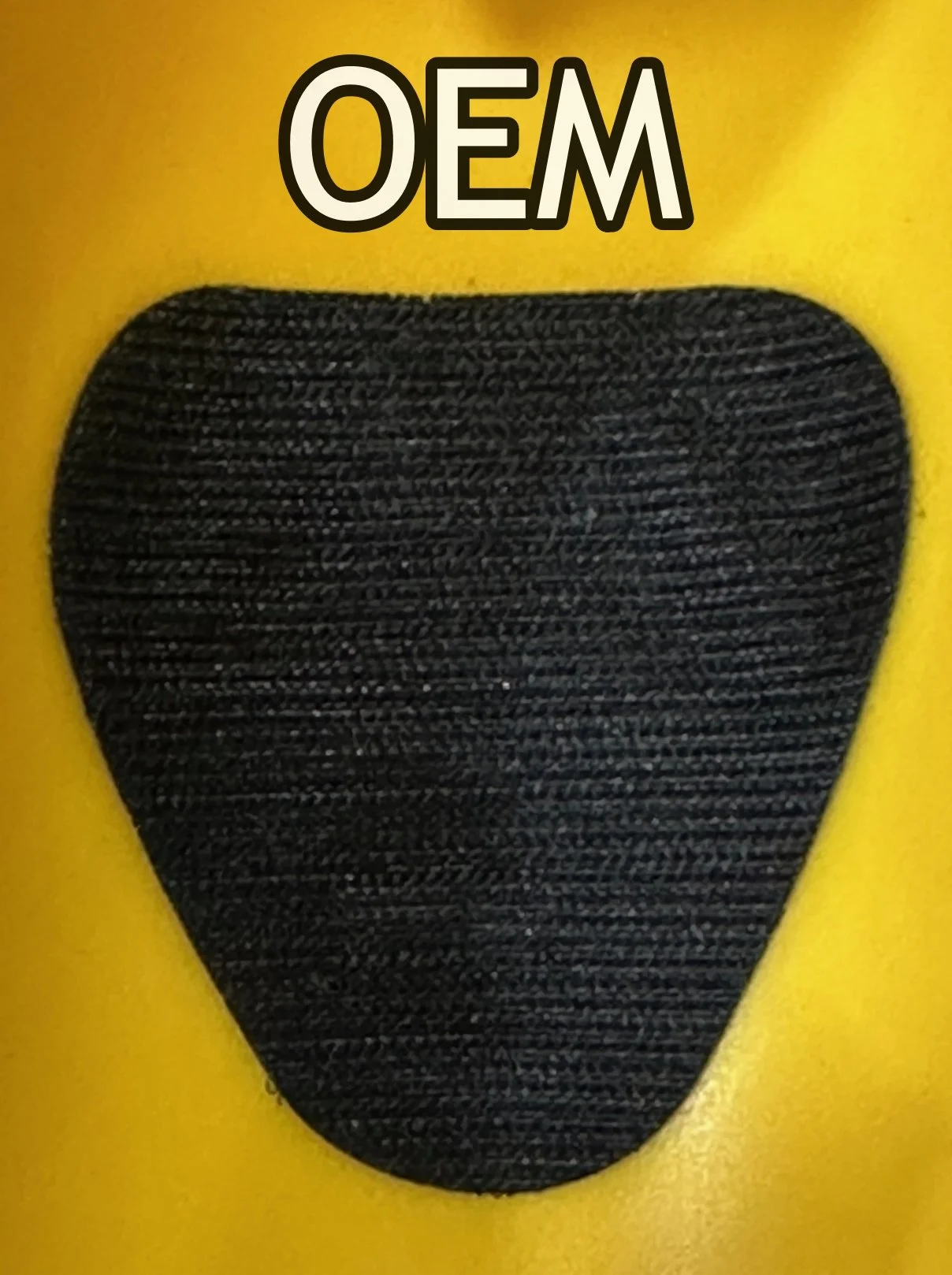
Genuine Yellofin boots secure the Velcro straps using adhesive and sometimes staples.
D. Position Markings
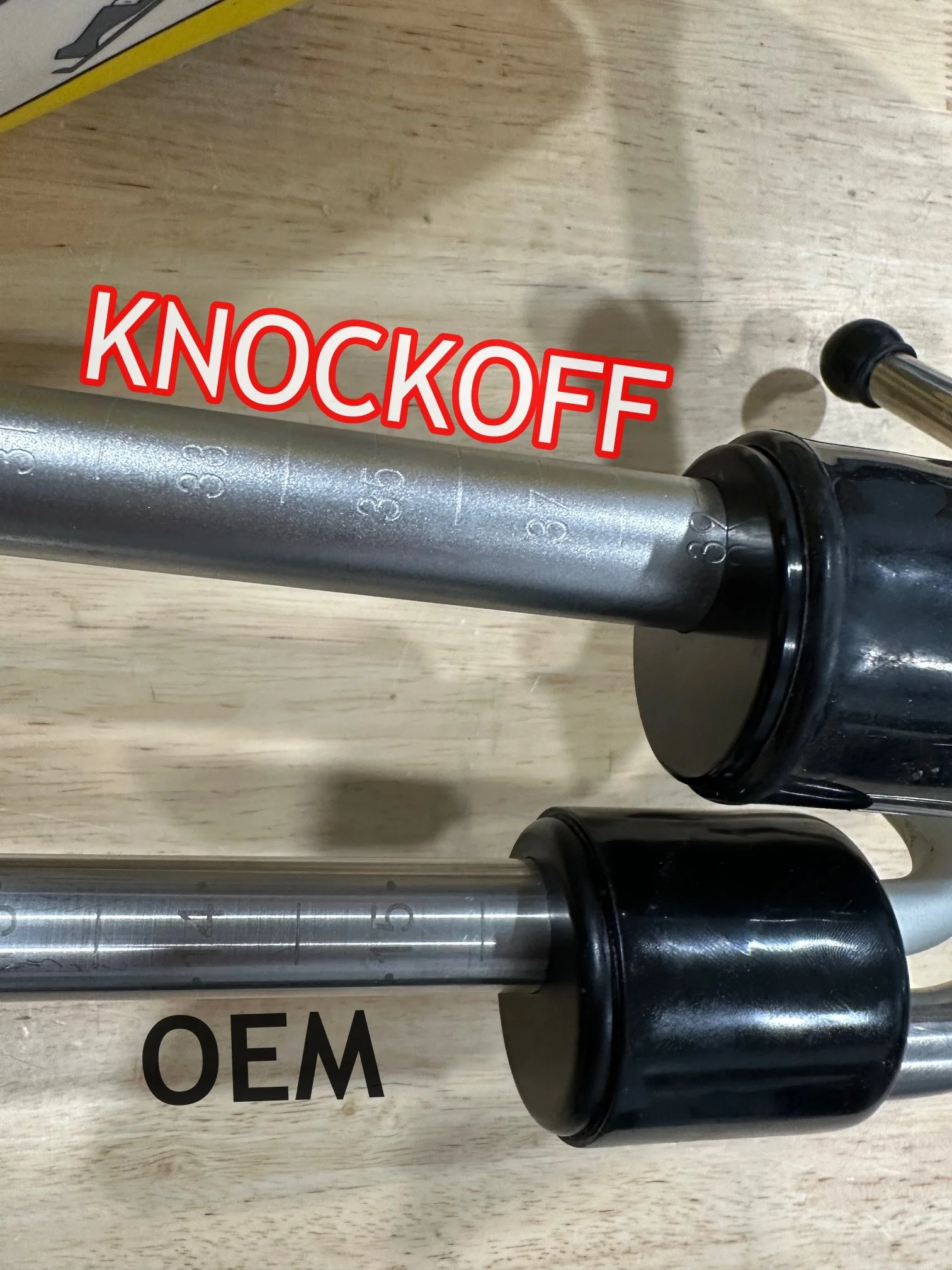
The genuine Allen stirrup uses laser-etched markings from 1 to 15 on the shaft. The knockoff we purchased for comparison features deeply engraved numbers from 1 to 38 (marking every 20mm), clearly indicating a different manufacturing standard and calibration.
E. Boot Color and Decal
While simple, a noticeable difference is the boot itself. The inferior yellow plastic boot in this case is a lighter, less saturated yellow than the true Yellofin.
F. Lift Assist Fittings
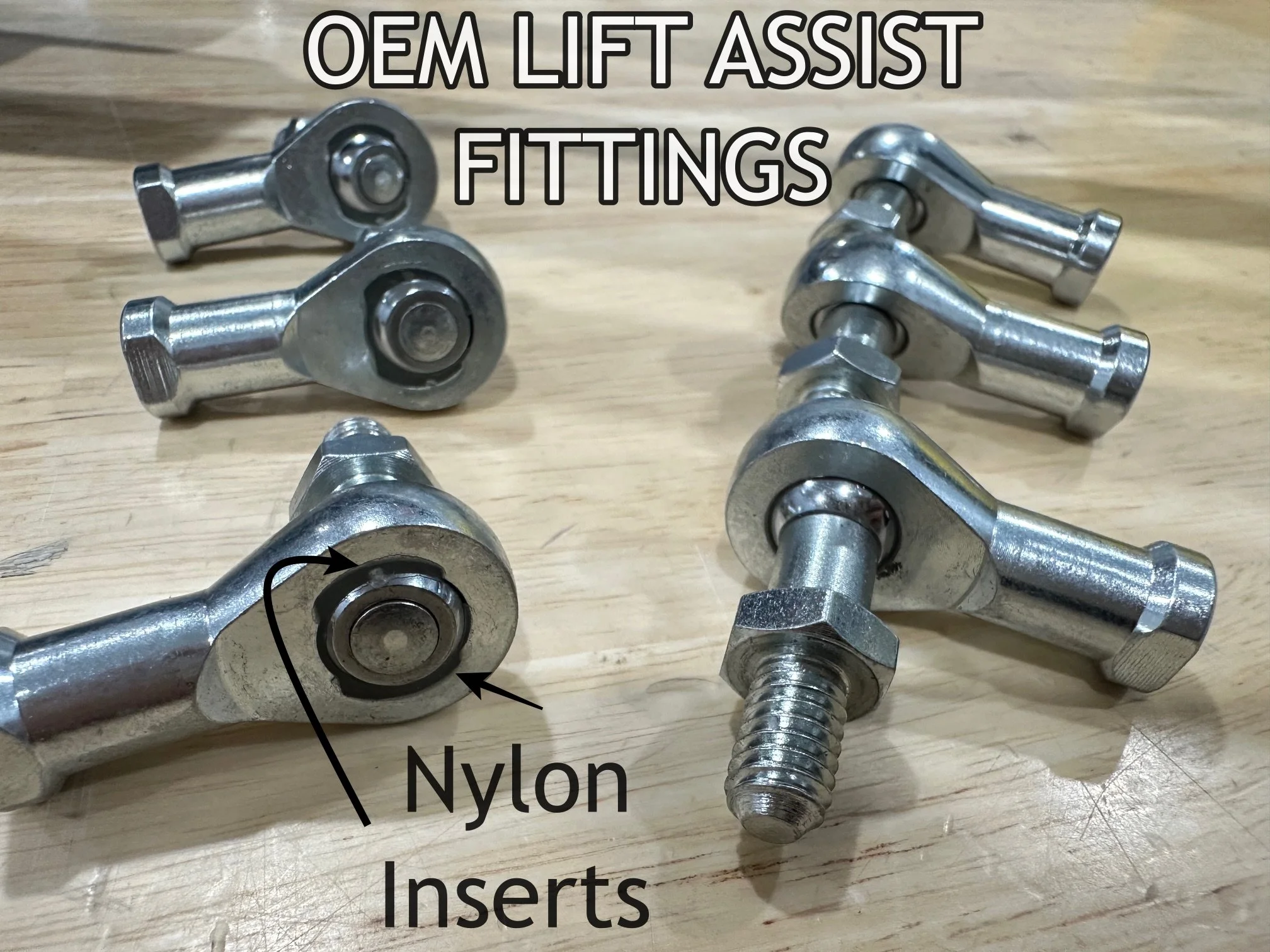
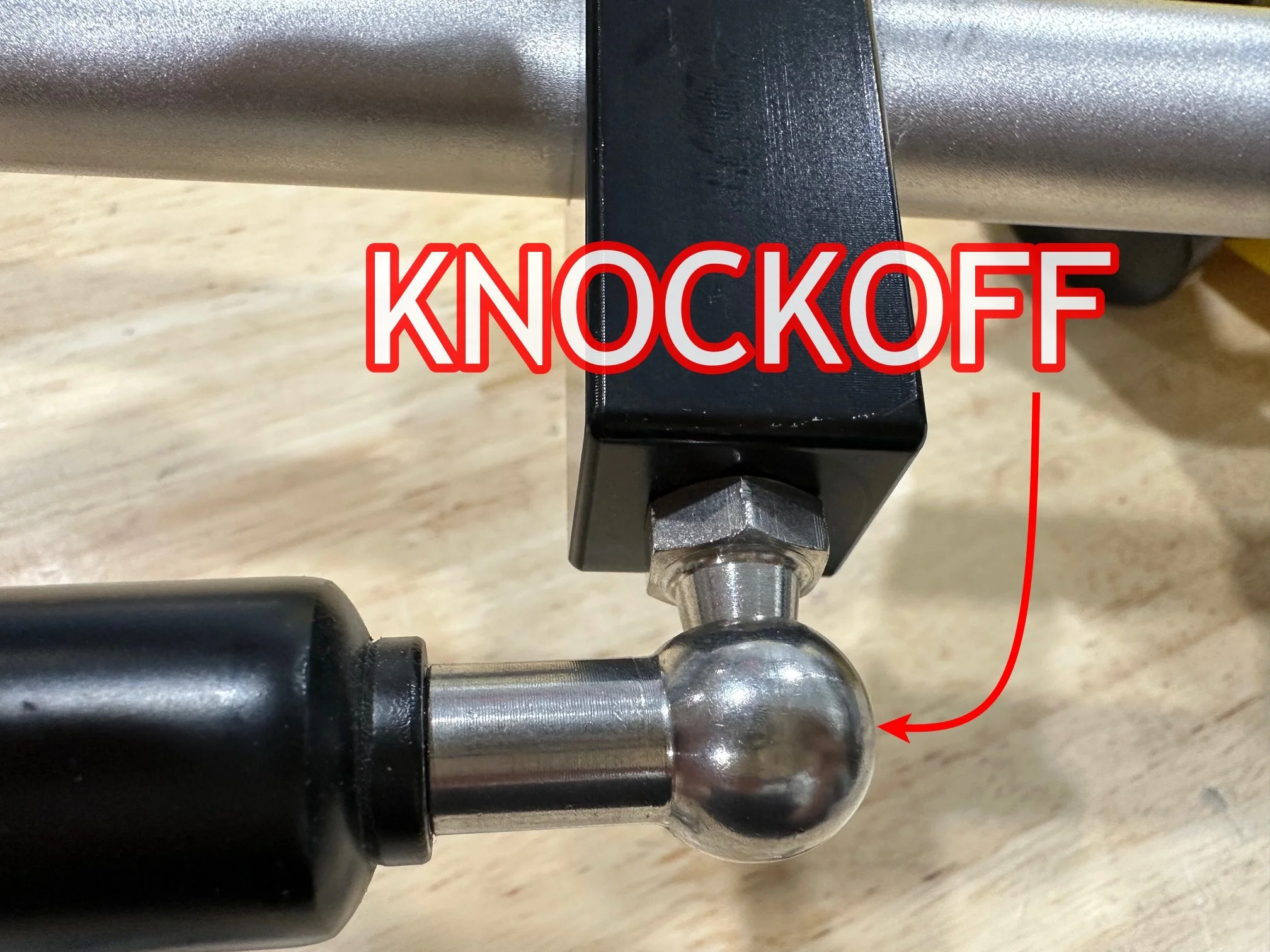
A critical difference is in the lift assist fittings. Genuine Allen fittings incorporate no-maintenance permanently bonded end fittings with nylon inserts, designed for smooth, reliable, and long-lasting operation. Inferior versions omit these high-quality components, using a two part snap together upper fitting, leading to premature wear and failure.


G. Internal Components
We disassembled the main lock assembly to find a completely different locking technology than OEM versions. Not commenting on the quality, we question letting patients limbs relying on a non FDA registered or regulated medical device for support.
The Takeaway
These are not all minor cosmetic variations. They represent fundamental design choices that impact patient safety, ease of use, and the long-term service life of the equipment. As repair experts who see the direct results of compromised manufacturing, we encourage all healthcare facilities to verify the authenticity of their surgical equipment.
If you have a stirrup that you suspect may not be genuine, feel free to send us a clear photo or ask us any questions—we can often identify the origin just by looking at a few key features.
Looking Ahead...
We’ve highlighted a typical overseas knockoff, but did you know that an unexpected large-scale company has also introduced a functionally inferior, non-OEM version? This might surprise you.
In our next article, we will identify this widely used knockoff and explain the subtle but critical differences you need to watch for.
P.S. For fellow repair professionals looking for reliable, OEM-style parts, please visit stirrupparts.com.
